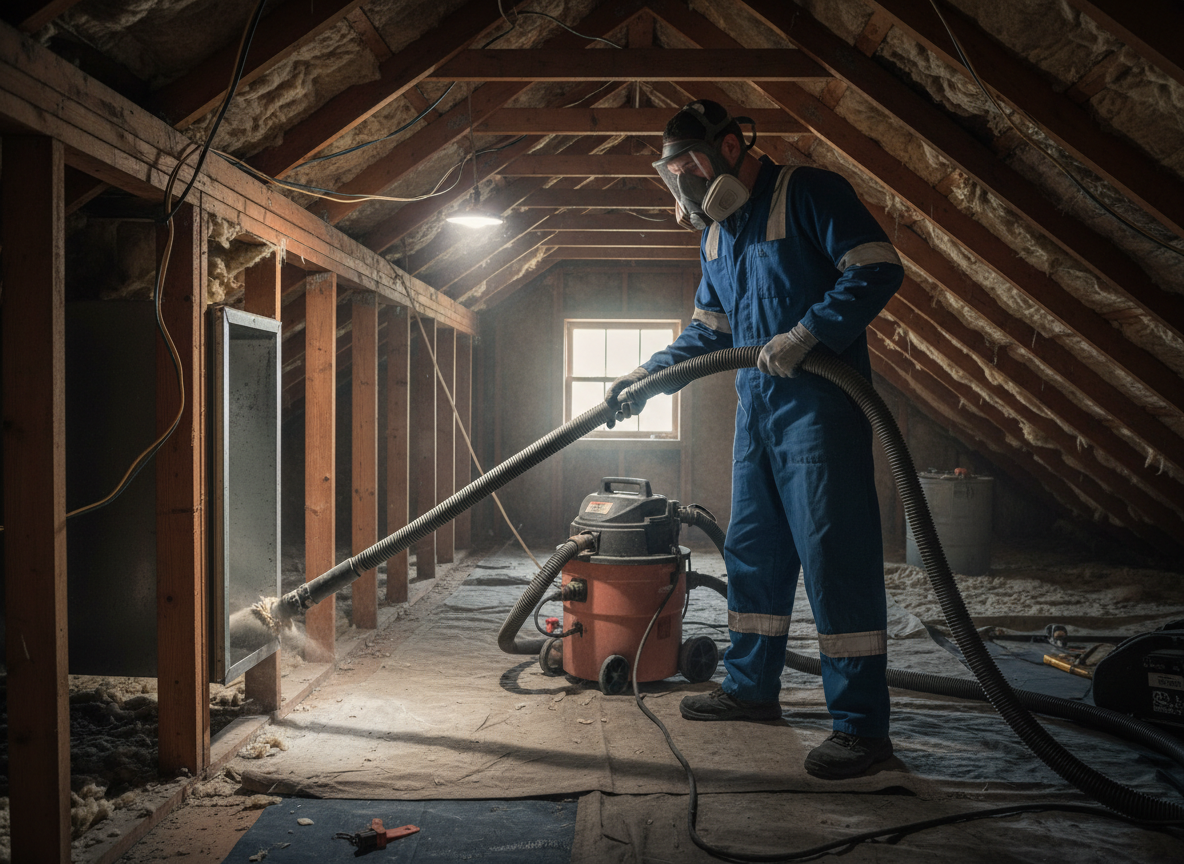
Upper Arlington homes built in the mid-century era, especially those clustered near the Upper Arlington Municipal Center and Northam Park, often carry original metal duct runs that collect fine construction grit alongside seasonal pollen. In Franklin County the shift from humid summers to cold, dry winters drives rapid dust settling inside vents that serve forced-air systems. Cleaning crews must navigate tight attic spaces and low-clearance basements common in Arlington Ridge and River Ridge without disturbing insulation or wiring that has settled over decades.
Four-season weather patterns create distinct cleaning demands. Spring pollen loads from nearby Worthington and Grandview Heights filter into return vents, while summer humidity encourages minor mold films on cooler duct surfaces. Winter heating cycles then bake that residue into a fine layer that restricts airflow. Technicians working out of the Reed Road base routinely pull registers in living areas and use negative-air machines to capture debris before it migrates into finished spaces near the Upper Arlington Public Library.
Edge cases surface when homeowners have added finished basements or second-story additions common along Tremont. Newer flex duct runs often connect poorly to older rigid trunks, creating hidden pockets that standard brushes miss. Proper service includes camera inspection of every accessible branch, followed by agitation and HEPA vacuum extraction rather than simple blowing that can push contaminants deeper into wall cavities.
Technician insight
In Upper Arlington, the thing that catches most people out with air vent cleaning is the mix of original rigid ducts and later flex runs in homes around Arlington Ridge and Tremont. Those transitions trap debris that a standard vacuum alone never reaches, especially after a humid summer followed by winter heating cycles.
Mid-century home near Northam Park
Homeowners noticed uneven airflow on the second floor. Inspection revealed decades of construction dust lodged at the rigid-to-flex transition in the attic. Negative-air cleaning cleared the blockage and restored balanced supply to the bedrooms.
How it works
- 1
Initial Walk-Through
Technician inspects every accessible vent and return in the home, noting duct material, access points, and any visible debris patterns tied to the property's age and location.
- 2
Register and Boot Removal
All floor and wall registers are removed and cleaned separately while boots are vacuumed to prevent debris from falling into wall cavities during the main extraction.
- 3
Negative-Air Extraction
A HEPA-filtered vacuum is connected to the main trunk while brushes and whips agitate interior surfaces, pulling loosened material out of the system.
- 4
Final Inspection and Reassembly
Camera check confirms cleanliness, registers are reinstalled, and airflow is verified before the crew leaves the Upper Arlington address.
Pricing
Pricing varies by number of vents, home size, and whether access requires attic or crawl-space work.