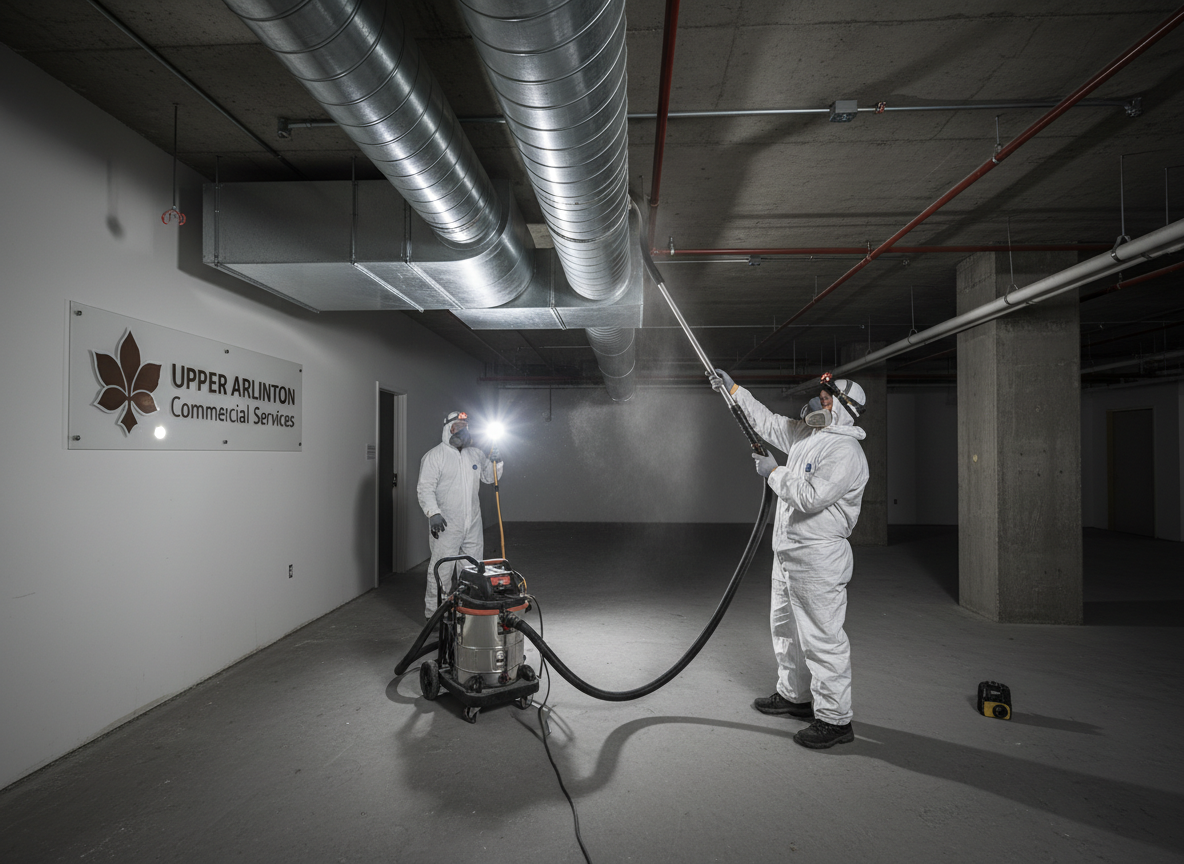
Upper Arlington commercial properties, especially those built between the 1950s and 1980s along Reed Road and near the Upper Arlington Public Library, often run older galvanized or lined duct systems that trap construction debris, pollen, and winter heating residue. Four distinct seasons drive heavy spring pollen loads and fall leaf debris into rooftop intakes, while summer humidity encourages microbial growth inside poorly insulated runs. Commercial cleaning here requires negative-air machines sized for larger trunk lines and access through ceiling plenums without disrupting tenant operations during business hours.
Buildings in Arlington Ridge, Tremont, and River Ridge commercial strips sit on gently rolling terrain that creates uneven airflow and dust settling in low points of the duct runs. Proximity to Columbus and Worthington means many properties share HVAC loads with neighboring offices, so cross-contamination risks rise when filters are bypassed during tenant fit-outs. Technicians must map every branch and register, seal returns before agitation, and verify post-clean static pressure to keep rooftop units from short-cycling in July heat or January cold snaps.
Work near Northam Park and the Municipal Center frequently involves after-hours scheduling to avoid foot traffic from library events or city meetings. Crews use HEPA-filtered vacuums and rotating brushes calibrated for both rigid and flex duct common in these mid-century structures. Spot checks with borescopes confirm removal of visible buildup before reassembly, and all debris is contained on-site to protect adjacent retail spaces in Grandview Heights and Worthington corridors.
Technician insight
In Upper Arlington the thing that catches most people out with Commercial Air Duct Cleaning is the low spots in duct runs created by the rolling terrain around Reed Road and Arlington Ridge; those pockets hold winter heating residue and spring pollen that standard residential tools miss, so you end up re-cleaning the same lines six months later if you skip the borescope check.
Tremont retail strip HVAC restoration
A small retail building near Tremont had recurring musty odors after summer humidity spikes. Inspection showed heavy dust and leaf debris settled in low trunk sections feeding three rooftop units. Negative-air cleaning and targeted agitation cleared the buildup; post-job airflow tests showed restored static pressure and no odor return through the next heating season.
How it works
- 1
Site Assessment
Walk every accessible trunk and branch in the commercial space, noting access points, insulation condition, and any moisture stains from Franklin County humidity swings.
- 2
Containment Setup
Place negative-air machines and sealed barriers at returns to keep dislodged material from migrating into occupied tenant areas near the Municipal Center or Northam Park.
- 3
Mechanical Agitation
Run rotating brushes and compressed-air whips through main and branch lines, focusing on low spots created by the area’s rolling terrain that collect heavier debris.
- 4
Final Verification
Borescope inspection of random sections and static-pressure test to confirm airflow matches original design before restoring normal 24/7 building operation.
Pricing
Commercial pricing reflects building size, number of rooftop units, and access difficulty in older Upper Arlington stock; quotes are provided after on-site assessment.