Upper Arlington homes built across decades in neighborhoods like Arlington Ridge, Tremont, and River Ridge often feature trunk-and-branch duct systems routed through basements or crawl spaces that collect fine silt from Franklin County soils and tree pollen blown in from Northam Park. Four distinct seasons drive repeated expansion and contraction of metal ducts, loosening joints and allowing dust to bypass filters during humid summers and dry winters. Technicians start by mapping every accessible run with a camera to locate restrictions near the Upper Arlington Public Library area where older ranch layouts create long horizontal runs prone to settling debris.
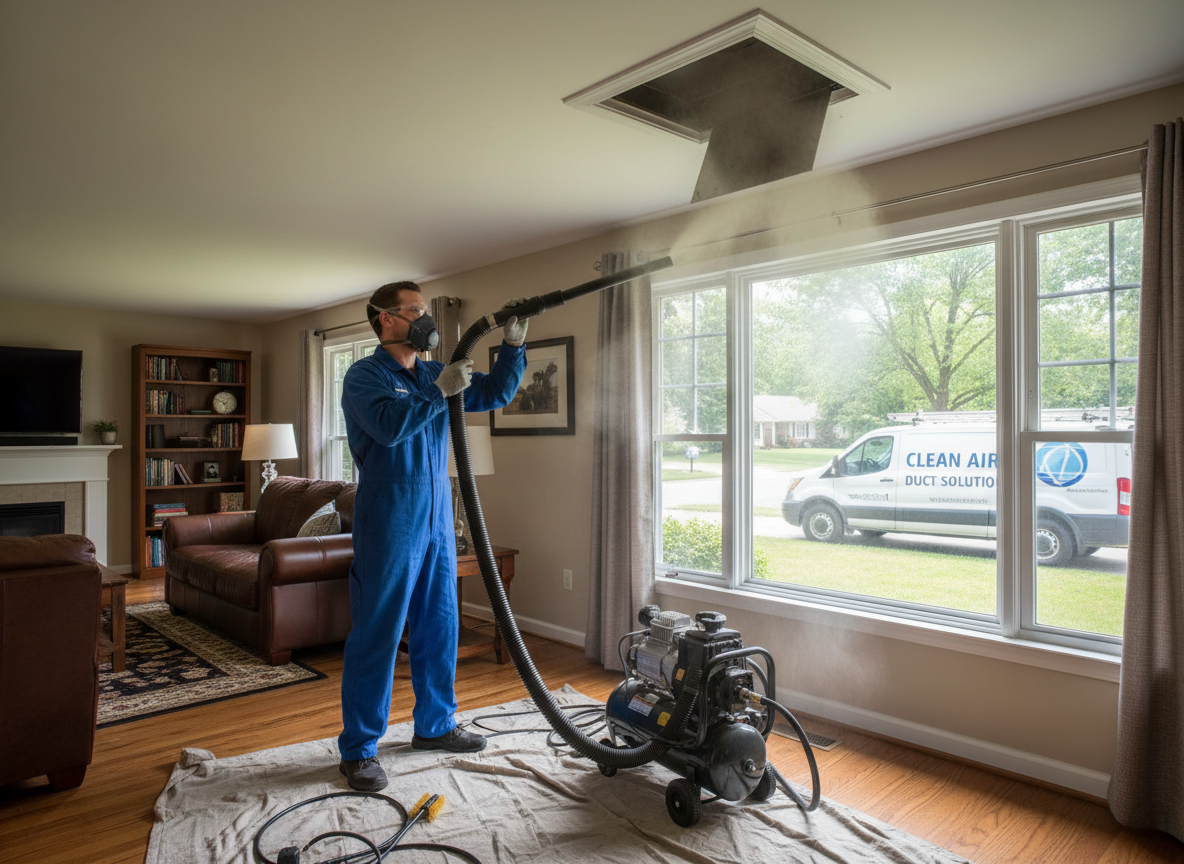
Cleaning focuses on source removal rather than simple vacuuming because loose insulation fragments and pet dander common in Grandview Heights and Worthington border homes can re-entrain if not fully dislodged. Negative-air machines are positioned at the main trunk while brushes and compressed air agitate branch lines, capturing material before it reaches the HVAC unit. Crews seal minor gaps with mastic during the same visit to prevent future infiltration, especially important when winter winds push air through unsealed returns near the Upper Arlington Municipal Center.
Homeowners in River Ridge frequently report musty odors after heavy spring rains because moisture lingers in low-lying duct sections; we isolate those runs and apply only EPA-registered sanitizers labeled for HVAC use. The work avoids disruption to finished spaces by using existing access points whenever possible and always restoring registers to their original positions.
Technician insight
In Upper Arlington, the thing that catches most people out with Residential Air Duct Cleaning is how four-season humidity swings loosen joints in the long horizontal runs typical of 1960s-1980s homes near Tremont and River Ridge; once those seams open, spring pollen and winter dust bypass filters and settle in the basement trunk lines where most homeowners never look.
Persistent dust in Arlington Ridge ranch
A homeowner in Arlington Ridge noticed fine dust returning to surfaces weeks after filter changes. Camera inspection revealed settled debris along a 40-foot basement trunk that had settled due to repeated freeze-thaw cycles. We isolated the system, agitated and extracted the material, then sealed three loose joints. Follow-up confirmed airflow improved and dust complaints stopped.
How it works
- 1
Initial Camera Inspection
Technicians map the full duct layout from the furnace or air handler outward, documenting blockages and joint separations common in Upper Arlington's older housing stock.
- 2
System Isolation and Containment
Registers are sealed and negative pressure is established to keep dislodged material from entering living areas during agitation.
- 3
Mechanical Agitation and Extraction
Rotating brushes and directed air move debris to the collection point while HEPA filtration captures fine particles before exhaust.
- 4
Final Verification and Sealing
A post-clean camera check confirms clearance, and accessible gaps receive mastic to reduce future infiltration from seasonal wind and humidity changes.
Pricing
Pricing varies by system size, number of stories, and extent of debris; most Upper Arlington homes fall into a mid-range project that includes full inspection and cleaning.