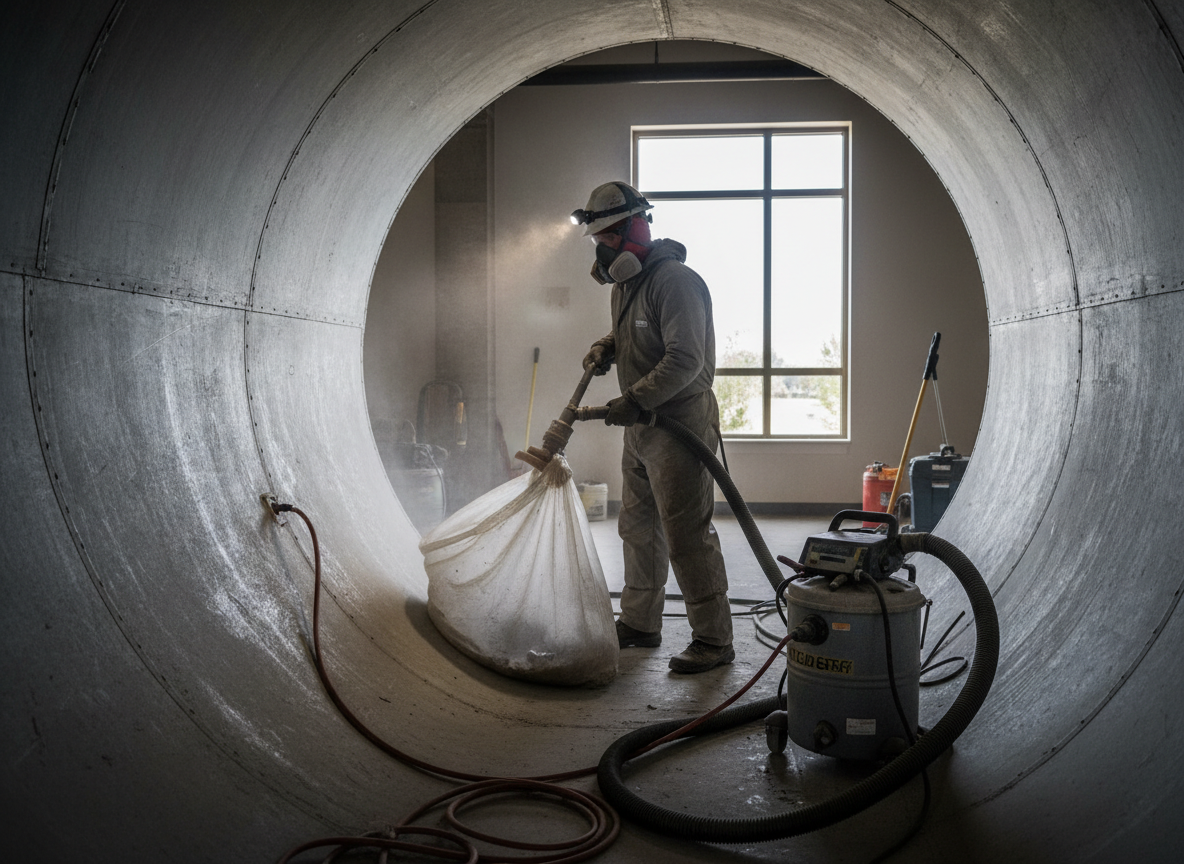
Industrial air duct systems in Upper Arlington face unique pressures from the region's humid continental climate. Four distinct seasons drive heavy summer humidity that promotes condensation inside metal trunk lines, while winter heating cycles pull in dry air that carries fine dust from nearby construction and traffic along Reed Road. Buildings near the Upper Arlington Municipal Center and Upper Arlington Public Library often run larger rooftop units feeding multiple zones, where even small blockages quickly affect entire floors. Technicians must account for mixed duct materials, older galvanized sections that corrode at joints, and limited access points behind suspended ceilings common in these mid-century structures.
Work in neighborhoods such as Arlington Ridge and River Ridge requires careful coordination around occupied spaces. Many industrial-grade installations here serve municipal or institutional use and cannot be fully shut down during business hours. Crews stage equipment at street level and run negative-air machines through existing chaseways to avoid disturbing operations at Northam Park facilities or the library. Soil conditions in Franklin County also matter; clay-heavy ground around Tremont holds moisture that can seep into below-grade ducts if seals fail, creating hidden microbial growth that only shows up during detailed camera inspections.
Edge cases appear when systems tie into original 1960s ductwork still present near Grandview Heights borders. These runs often lack modern access doors, forcing technicians to cut temporary entries that must be sealed to code after cleaning. In Worthington and Columbus fringe areas, pollen loads spike each spring and fall, coating coils faster than residential systems experience. Proper containment prevents cross-contamination between zones, and final verification includes airflow readings at multiple registers to confirm restored performance without guessing.
Improper cleaning methods can dislodge insulation or damage dampers in these older industrial setups. Always verify that the service uses HEPA-filtered equipment and documents before-and-after conditions rather than relying on visual checks alone.
Technician insight
In Upper Arlington, the thing that catches most people out with Industrial air duct cleaning is condensation inside older galvanized ducts serving buildings near the library and Municipal Center. The humid summers here create moisture that mixes with dust from Reed Road traffic, and many operators miss the lower-level runs until airflow complaints become constant.
Library HVAC Restoration
A public facility near Northam Park reported uneven cooling across reading rooms. Inspection revealed heavy dust and corrosion in the original trunk lines feeding multiple zones. Technicians isolated sections, performed contained mechanical cleaning, and restored balanced airflow without shutting down the building during operating hours.
How it works
- 1
Site Assessment
Map all accessible trunk lines, return plenums, and rooftop units while noting any corrosion or insulation issues common in Upper Arlington's older commercial stock.
- 2
Containment Setup
Install negative-air machines and sealed entry points to protect occupied spaces around the Municipal Center and library without interrupting daily operations.
- 3
Mechanical Cleaning
Use rotary brushes and compressed air on galvanized and flex sections, followed by coil cleaning where humidity-driven buildup is heaviest.
- 4
Verification and Documentation
Perform camera sweeps and airflow tests at multiple points, then provide a written report of conditions found and restored performance.
Pricing
Pricing varies by system size, number of zones, and access difficulty in older Franklin County buildings.